
Your needs, this model
Does it fit your priorities?
Can I combine mechanical controls, a front-loading bobbin, 5 mm maximum width and an 800-stitches-per-minute published maximum?
Yes. Those specifications appear on the exact US eXplore 130 page and in its linked operating guide; the speed remains pedal-controlled.
Explore this need in the finder →Does the eXplore 130 offer a one-step buttonhole?
No. Its listed buttonhole is four-step; you move the mechanical selector through the sides and bartacks.
Explore this need in the finder →Does the eXplore 130 have a top-loading bobbin visible through a clear cover?
No. Its exact page specifies a vertical oscillating hook; the bobbin case is inserted from the front.
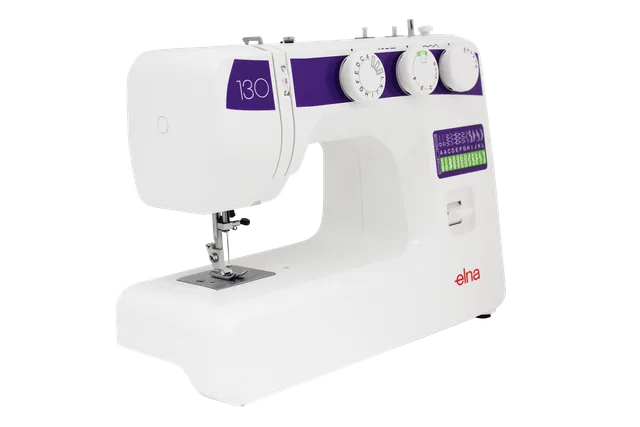
Explore this need in the finder →The Elna eXplore 130 is a mechanical sewing machine whose clearest advantage over the eXplore 120 is a better-documented stitch range: the U.S. page lists 23 patterns, a maximum width of 5 mm and a maximum length of 4 mm. It retains a front-loading bobbin case and a four-step buttonhole. If you want physical stitch selection and a conventional pedal, it offers more pattern variety than the 120 without moving to a computerized control system.
More stitch choices, still mechanical
Elna describes the 130 as a mechanical sewing machine with an extra-high presser-foot position, free arm, clip-on feet and three-piece feed dog. The 23-pattern count is a model-specific listing; it is not a performance score, and a wider menu does not guarantee a better seam on a particular fabric. The manual treats different stitches as separate settings, so use the chart and a scrap rather than assuming every pattern uses the same length or tension. The 5 mm width and 4 mm length are published maxima, not a promise that every stitch can use both at once.
Speed is controlled by the foot pedal. Elna states a maximum of 800 stitches per minute, while the guide explains that pressing farther makes the machine run faster. That figure is a ceiling, not an independent speed control or a sewing result measured in a test. If your essential need is to prevent the machine from reaching its highest rate, the 130’s mechanical pedal arrangement does not establish a separate cap. Likewise, it does not provide documented pedal-free start/stop operation.
Front-loading bobbin and four-step buttonholes
The exact product page lists a vertical oscillating hook. The matching manual shows the bobbin case being removed and reinserted from the front; it is not the horizontal rotary drop-in arrangement used by the eXplore 160. This matters in daily use: you handle a case when changing or cleaning the bobbin area, rather than lifting a top cover and checking thread through a transparent bobbin window. It is a preference, not proof one mechanism will make better stitches.
The 130 has one four-step buttonhole. The guide has you mark the length, align the sliding buttonhole foot and change the pattern selector for the sides and bartacks. The operator stops and changes stages; this is not a one-step cycle that completes itself. If you sew buttonholes only occasionally and are content to follow the steps, that may be perfectly workable. If buttonholes are frequent or you need a one-step control routine, compare the exact buttonhole method first and make a sample in the intended material.
What comes with the standard machine
Elna’s U.S. accessory list includes a standard foot, zipper foot, blind-hem foot, sliding buttonhole foot, darning plate, three bobbins, seam ripper, needle set, felt and foot controller. The manufacturer lists optional accessories separately. It does not identify a walking foot or a separate large extension table in this standard package. Dealer bundles can differ, so a listing that advertises extra tools should be checked against the exact package rather than merged into the model’s base facts.
The machine body is 388 × 295 × 152 mm and weighs 6 kg, the same listed envelope and weight as the 120. Elna does not publish the needle-to-arm opening on this page. The free arm is useful for cuffs and tubular garment parts, but it does not tell you how much space is available for bulky quilting under the arm. Leave additional worktop space for the fabric, controller and cable.
Care and a sensible buying boundary
The exact manual’s maintenance section describes removing the bobbin case and hook race, brushing lint from the hook area and cleaning the feed dog. It cautions you to switch off or disconnect the machine before the relevant work and not to dismantle beyond the described steps. Follow that guide instead of applying a routine from a different model. The product materials reviewed here do not establish a dedicated presser-pressure dial; upper-thread tension is not the same control, so a need for adjustable foot pressure should not be assumed satisfied.
The eXplore 130 is a sensible candidate when ordinary garment sewing, mechanical controls, a 5 mm stated maximum width and 23 patterns describe the job. The eXplore 120 has fewer patterns and an unquantified width in its page/manual combination, although it shares the 800-stitches-per-minute ceiling and front bobbin case. The eXplore 160 has a top-loading clear-cover bobbin and retractable feed dog but is rated at 700 stitches per minute. Compare those details against the way you thread, change settings and support fabric—not a generic “beginner” label.
Sources: Elna USA’s eXplore 130 product page and its linked English instruction book, including the speed-control, buttonhole and care sections. Checked October 23, 2026.
Key details at a glance
| Motor and stitch controls | Mechanical pattern and stitch-length dials with foot-control speed variation. Elna publishes 800 stitches per minute as the maximum; the product page does not list an independent speed ceiling. |
|---|---|
| Stitch choices and limits | Twenty-three patterns, with up to 5 mm stitch width and 4 mm stitch length. The machine has more pattern choices than the 120; this count does not certify fabric performance or stitch quality. |
| Buttonhole routine | A four-step buttonhole uses a sliding foot and manual selector changes; the manual describes operator-controlled stops between the sides and bartacks. |
| Working space and size limits | Body is 388 × 295 × 152 mm and 6 kg. Elna does not publish the needle-to-arm opening here; make room around the body for large fabric pieces. |
| Supplied tools and fabric support | The page lists standard, zipper, blind-hem and sliding buttonhole feet, a darning plate, three bobbins, seam ripper, needle set, felt and foot controller. It does not list a separate large extension table or walking foot. |
| Needle setups, cutting and memory | The reviewed arrangement is single-needle ordinary sewing through a foot pedal. No motorized embroidery, serger knife, automatic cutter, pattern memory or lettering is claimed. |
| Presser-foot pressure | A dedicated presser-pressure control is not established in the exact product and manual material reviewed. Upper-thread tension is a separate adjustment. |
| Cleaning and lubrication | The exact guide describes taking out the front bobbin case, cleaning the shuttle race with a brush/soft dry cloth and clearing lint from the feed dog. Power off/unplug before the indicated service. |
Use the exact model’s instructions for operating limits, supplied equipment and version differences.
Sources for this assessment
Choose the operating routine that suits your work.
Start with whether you sew, embroider, serge or coverstitch, then compare controls, working area, supplied tools and setup limits.