
Your needs, this model
Does it fit your priorities?
Can I sew without a pedal while retaining IDT and a speed cap?
Yes. The exact listing specifies IDT, 7 mm maximum width, Start/Stop and a speed slider; the manual documents sewing without the foot control.
Explore this need in the finder →Can this 145 mm opening satisfy a 200 mm minimum for broad quilt work?
No. PFAFF lists 145 mm needle-to-tower space. The ambition 610 is listed at 200 mm and quilt expression 725 at 250 mm; check their controls and packages as well.
Explore this need in the finder →Does this exact model sew motorized-hoop embroidery rather than decorative stitches?
No embroidery unit or hoop workflow is documented for the passport 3.0. Its 100 numbered patterns are sewing stitches, not embroidery designs.
Explore this need in the finder →Can I require Original IDT and adjustable presser-foot pressure for ordinary sewing?
Yes. The exact product page names Original IDT; the shared owner manual describes the integrated top-and-bottom feed and an adjustable presser-pressure dial. Test the intended fabric and foot.
Explore this need in the finder →Does the written included list establish a separate walking-foot attachment?
No. The package list names IDT-compatible feet but not a detachable walking foot. Integrated IDT is not the same accessory as a separate foot in the box.
Explore this need in the finder →Can I require automatic thread snips?
Yes. The exact U.S. specification says Auto Snip, and manual page 18 documents cutting both top and bobbin thread with the snip button. Fine-thread performance is not specified.
Explore this need in the finder →Does its maker-published maximum speed reach 800 stitches per minute?
Yes. The product listing states maximum 800 stitches/minute and also lists a speed slider. That is a maker-declared ceiling, not an observed rate for every fabric or stitch.
Explore this need in the finder →Can I require an extension table as part of the exact published package?
Not on the evidence available. The 18-accessory text names a hard cover and listed tools/feet, but not a table. An unknown package item cannot satisfy an essential table requirement; confirm the dealer offer.
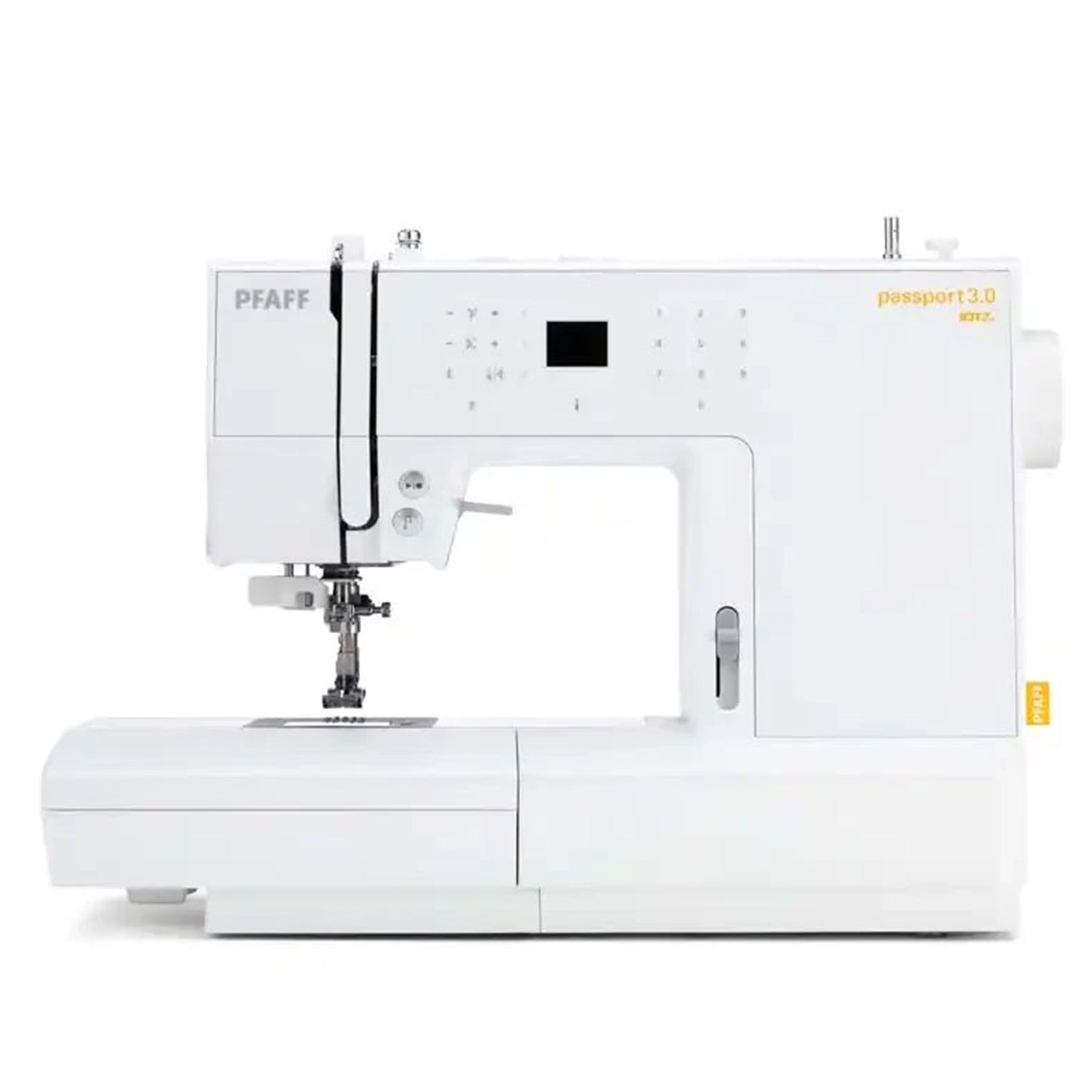
Explore this need in the finder →The PFAFF passport 3.0 is a compact computerized sewing machine for people who want to move a familiar setup between home, classes and retreats without giving up integrated fabric feed or useful hands-free controls. The current U.S. listing identifies SKU 850212112 and specifies 100 stitches, Original IDT, automatic thread snips, Start/Stop, a speed slider and a 145 mm needle-to-tower opening. This is an assessment of those maker sources, not a hands-on test. Its tradeoff is compact workspace; portability does not make it a roomy quilting machine.
Portable, but still a real computerized sewing machine
The manufacturer lists the machine at 6.7 kg (14.7 lb) and includes a hard cover. That is a plausible choice for someone who carries a sewing setup to a class or stores it after a project, although the weight is a useful reality check: it is portable, not featherweight. The listing describes a 1.3-inch diagonal display, built-in mechanical needle threader, needle up/down control, a manual thread-tension dial and a speed slider. They do not imply a touchscreen or automatic tension system.
The current product page says the passport 3.0 has 100 stitch patterns, with utility, buttonhole, decorative, quilting, needle-art and satin categories. The combined passport 2.0/3.0 owner manual’s chart gives the 3.0 its own stitch numbering and shows more choices than the 2.0, including several patterns absent from that model. The extra stitch selection is useful if you really sew decorative hems or want to experiment; it does not make every project easier, and the 7 mm maximum width is not the broader 9 mm format offered by some larger machines. The manual also lists 29 needle positions for straight stitching, a more practical detail for zipper work and precise topstitching than the headline pattern count.
IDT helps manage layers, but does not add throat space
PFAFF’s Original IDT system is an integrated upper feed that works with the feed dogs below. The manual explains engaging it for compatible feet and disengaging it with the foot types that require that setup. For a garment maker, quilter or home sewer who often handles slippery fabric, stripes, knits or several aligned layers, feeding from both sides can be a helpful way to reduce differential movement. It is different from a separate walking-foot attachment, and the maker’s included-foot list does not name a detachable walking foot. The manual also shows a presser-pressure dial that can be loosened for very light fabric or increased for heavier material, plus manual thread tension. Those adjustments are useful, but they are not a promise that every fabric stack will sew perfectly without a sample seam, suitable needle and correct foot.
The sewing opening is 145 mm from needle to tower. That compact space is comfortable for garment panels, repairs, bags and smaller quilt blocks, but bulkier quilt rolls and large home-dec projects need more room to turn and support fabric. Feed dogs can be lowered for free-motion stitching; the manual’s free-motion instructions call for an optional foot, so do not read that capability as a supplied quilting-foot package. The photographed machine does not establish that an extension table is included. Its written 18-item accessory list names a hard cover and six feet but not a table; check the exact dealer offer if table support matters.
Controls that change the day-to-day routine
The included foot control gives the familiar pedal-led routine. For a pedal-free option, the Start/Stop button starts and stops sewing while the speed slider caps the maximum pace. The maker lists a maximum of 800 stitches per minute; that is a published specification, not a measured result across fabrics and stitch settings. Needle up/down lets you pivot with the needle where desired. The machine’s automatic snips cut top and bobbin threads and return their tails to the back; the manual says pressing the snip button during stitching finishes the stitch, ties off and cuts. That is a meaningful convenience difference from the passport 2.0, whose current listing describes a manual cutter. Both models keep the same 145 mm workspace, so upgrading within the passport family does not solve a throat-space problem.
The one-step buttonhole foot 5B is included. The shared owner manual table lists standard, rounded, eyelet and stretch buttonhole stitches for the 3.0, while the current product FAQ summarizes the choices differently. If a particular buttonhole type is essential, ask an authorized dealer to confirm the exact machine and manual version. In any case, stabilize the fabric and sew a sample first; an automatic sequence does not remove the need to test on the garment material.
Who should choose it—and who should compare first
Shortlist the passport 3.0 if you want a sewing-only machine for garment construction, alterations, regular home projects and manageable quilt work; value IDT and automatic thread snips; and expect to carry or store the machine. Its Start/Stop option gives a second control style, and the 100 stitch set is broader than the passport 2.0’s 70 patterns. If you do not need those extras, compare the 2.0 on the exact seller package rather than assuming the newer model changes the workspace. If you regularly spread a large quilt beside the needle, compare a larger-opening machine such as the PFAFF ambition 610 (200 mm) or quilt expression 725 (250 mm), then weigh their overall size, controls and package against your actual room. If you require motorized hoop embroidery, a serger, coverstitch or longarm quilting, this single-needle sewing machine is the wrong kind of equipment; decorative stitches and free-motion work are not substitutes.
The official listing currently directs shoppers to a dealer rather than standard online checkout. Before purchasing, match the seller’s SKU to 850212112 and confirm the written package contents, included feet, warranty and service path. The manufacturer lists 18 accessories, but bundle details can change by offer. A precise match between the machine and the dealer’s package matters more than an attractive gallery image.
Key details at a glance
| Motor and stitch controls | The exact U.S. listing specifies built-in needle threader, 1.3-inch diagonal screen, needle up/down, manual tension, Start/Stop without foot control, speed slider, automatic thread snips and maximum 800 stitches/minute. The combined Passport Line manual has separate 3.0 and 2.0 control pages. Pedal and Start/Stop are two distinct sewing plans; the machine still needs mains power. |
|---|---|
| Stitch choices and limits | The current exact U.S. Passport 3.0 page states 100 stitches, max width 7 mm, max length 4.5 mm. The exact combined English Passport Line manual chart (printed pp. 7–8) distinguishes 3.0 from 2.0 and lists 100 numbered 3.0 patterns across utility, quilting, needle-art, satin and decorative groups. It lists 29 straight-stitch needle positions. No hoop embroidery or lettering feature is established. |
| Buttonhole routine | The Passport Line manual lists standard, rounded, eyelet and stretch buttonhole stitches for the 3.0 and documents the one-step 5B foot; the current product FAQ summarizes the choice count differently. Confirm the requested style with an authorized dealer and stabilize/test the fabric. |
| Working space and size limits | The exact product page gives 145 mm from needle to tower. The portable body still has a compact domestic sewing opening; large quilt bundles need more turning and support room. PFAFF ambition 610 is listed at 200 mm and quilt expression 725 at 250 mm. |
| Supplied tools and fabric support | Current U.S. listing says 18 accessories and names six presser feet (0A, 1A, 2A, 3, 4, 5B), bobbins, service tools, foot control, cord, needles and hard cover. Neither the written list nor combined manual establishes an extension table or detachable walking foot. Confirm exact dealer package and SKU 850212112. |
| Needle setups, cutting and memory | The exact model is a computerized domestic sewing machine. Its manual documents single-needle sewing, one-step buttonholes, drop feed for free-motion work and a free arm. The listing/manual do not document motorized-hoop embroidery, overlock, coverstitch or a dedicated longarm arrangement. An unknown embroidery feature cannot meet an essential hoop requirement. |
| Presser-foot pressure | The combined line manual describes a presser-pressure dial that can be relaxed for light fabric or increased for heavier fabric; its default is standard. Thread tension remains a manual top dial. |
| Cleaning and lubrication | The manufacturer guide says no lubrication/oiling is needed. It instructs owners to switch off, remove the bobbin cover and stitch plate as directed, and brush lint from the feed dogs and bobbin area; it specifically says not to blow air into the bobbin case. Needle system 130/705H is listed in troubleshooting. |
Use the exact model’s instructions for operating limits, supplied equipment and version differences.
Sources for this assessment
- Official U.S. passport 3.0 listing; exact SKU 850212112, dealer-exclusive sales route, specs, weight, 18 listed accessories, and automatic snips.
- Official English 32-page combined passport 2.0/3.0 owner manual, linked from the manufacturer manuals index; specific 3.0 stitch table, controls, accessories, feed, pressure, buttonhole, quilting, maintenance and troubleshooting inspected.
- Exact official PFAFF passport 3.0 machine-only image, manually checked against the exact product listing and visible body branding.

Choose the operating routine that suits your work.
Start with whether you sew, embroider, serge or coverstitch, then compare controls, working area, supplied tools and setup limits.