
Your needs, this model
Does it fit your priorities?
Can I sew long straight seams with a foot controller?
Yes. The EF1 is described as a high-speed straight-stitch machine and lists a foot controller.
Explore this need in the finder →Can I select a four-step buttonhole?
No buttonhole routine is listed for this straight-stitch-only model.
Explore this need in the finder →Can a separate speed limiter set a maximum pace?
No separate limiter is documented on the exact product page.
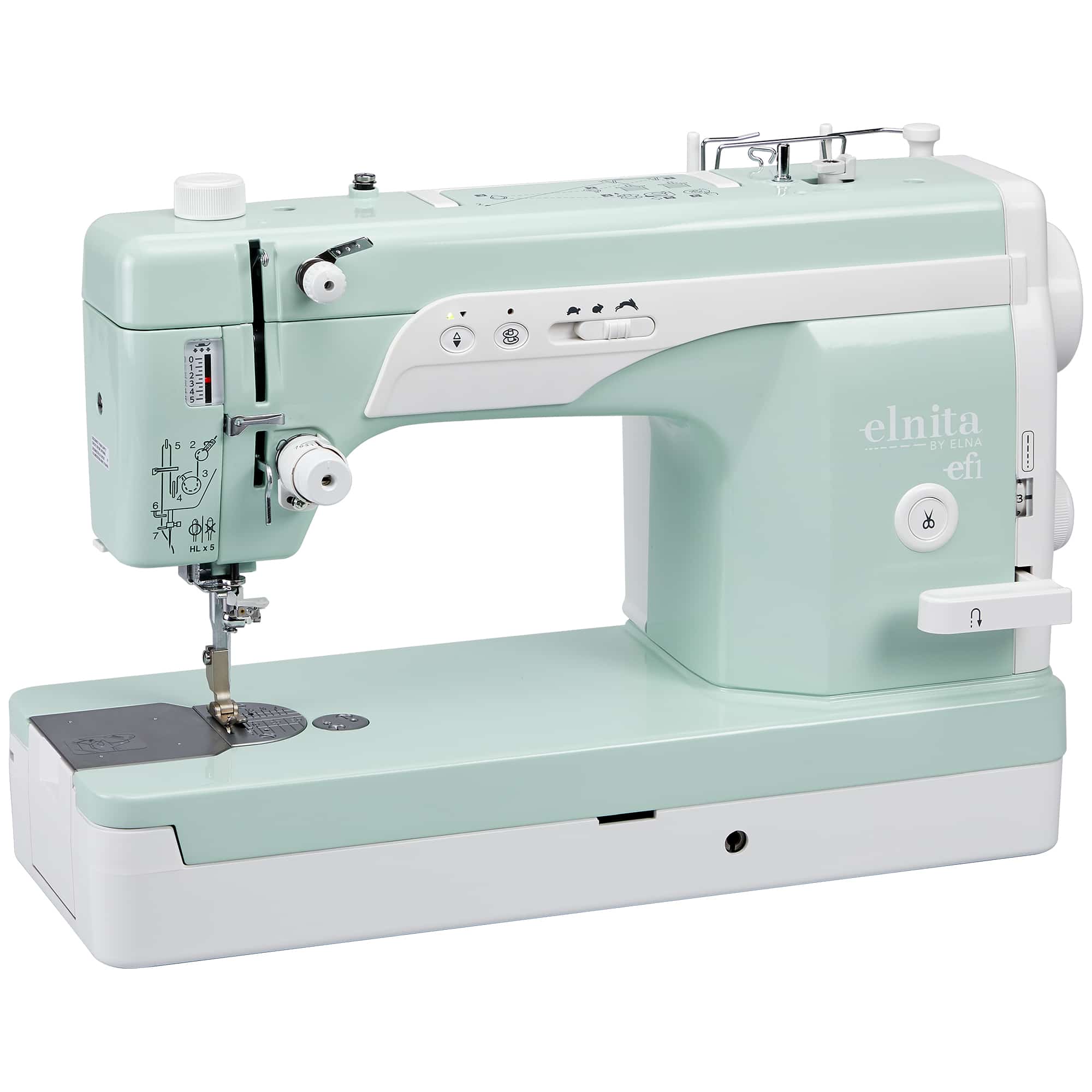
Explore this need in the finder →The Elna elnita EF1 is a high-speed straight-stitch machine for people whose work is built around seams, long quilting lines and controlled fabric handling rather than a large decorative stitch menu. Elna’s exact U.S. page calls it a “High Speed Straight Stitch” machine, lists a maximum 1,600 stitches per minute and a maximum stitch length of 6 mm, and describes eight enclosed ball bearings in the main shaft. That combination makes the EF1 a distinctly different proposition from a general-purpose computerized machine: the long straight stitch and included knee lifter are the point, not buttonholes or zigzag versatility.
A focused stitch path can be an advantage
For quilting, piecing and long construction seams, a fixed straight stitch removes pattern selection from the routine. The U.S. listing includes a cloth guide, rolled-hemming foot, foot controller and knee lifter, plus the usual needles, bobbins and tools. The knee lifter lets a sewist raise the presser foot while keeping both hands available to guide bulky fabric. Elna also lists a built-in needle threader, needle up/down and reverse button. Those are practical controls for a narrow, high-throughput task; they do not turn the EF1 into a machine with zigzag, decorative stitches or a buttonhole program.
Read 1,600 stitches per minute as a ceiling
The advertised 1,600 spm is a maximum, not a recommended pace for every seam or a promise about the rate you will achieve through thick, changing layers. The source lists a foot controller but no separate speed-limiting slider or pedal-free Start/Stop setup. If you want to set a hard maximum for beginners, slow detailed work or repetitive classroom use, do not infer that capability from the high top speed. The maximum stitch length is 6 mm; the page does not publish a maximum stitch width because this is the straight-stitch model. It should not be matched to a required zigzag width.
Strongest fit: straight-seam and quilting routines
The EF1 makes sense for a sewist who already knows that straight stitching covers the intended work and values a knee control and a long stitch. It is a less flexible household starting point if you expect to make stretch seams, finish edges with zigzag, sew decorative details or construct buttonholes on the same machine. The official leaflet describes commercial sewing purposes, while the U.S. product page also shows a domestic quilting project; neither is a hands-on performance test, so use them as maker positioning rather than proof of output on your fabric.
What to check before choosing it
The current support directory I inspected did not offer an EF1 instruction manual alongside the exact model photo, so I have not inferred maintenance intervals, presser-foot pressure adjustment or unsupported needle setups. Ask Elna or the dealer for the current EF1 guide and written package if those details matter. Compare the EF1 with the elnita EF72 if you want computerized selection, a wider stitch repertoire and quilting-oriented workspace; compare it with a conventional machine if you need buttonholes and zigzag. The EF1’s appeal is its specialization. It should be recommended only to a buyer who wants that fixed straight-stitch role and accepts the foot-controlled workflow and lack of broader sewing functions.
Thread preparation and package checks
The product page also lists adjustable thread tension, a built-in needle threader, needle up/down, reverse and an automatic bobbin winder. Those are useful conveniences around a straight-seam routine: winding bobbins and threading are setup tasks, while reverse helps secure a seam end. They do not add a speed limiter or a second stitch path. Elna lists five bobbins, a cloth guide, rolled-hemming foot, foot controller, knee lifter, oil, soft cover and an instruction book among the standard accessories. The product page names that book, although the U.S. support directory I checked had no downloadable EF1 manual. If you need presser-foot compatibility or maintenance instructions before buying, ask Elna or the seller for the current guide and confirm the delivered package rather than inferring extra accessories from an image.
Key details at a glance
| Motor and stitch controls | Exact page says high-speed straight stitch, foot controller; no pattern selector or separate slider. |
|---|---|
| Stitch choices and limits | Exact page lists 1,600 spm and 6 mm maximum length; eight enclosed main-shaft bearings are a maker claim. |
| Supplied tools and fabric support | Page lists foot controller, knee lifter, cloth guide, rolled-hem foot, tools and soft cover. |
| Needle setups, cutting and memory | Single-needle straight stitch; no zigzag, buttonhole, embroidery or serger function listed. |
Use the exact model’s instructions for operating limits, supplied equipment and version differences.
Sources for this assessment
Choose the operating routine that suits your work.
Start with whether you sew, embroider, serge or coverstitch, then compare controls, working area, supplied tools and setup limits.