
Your needs, this model
Does it fit your priorities?
Can I use computerized Start/Stop sewing without a connected pedal?
Yes. The exact manual documents Start/Stop and requires the foot control be disconnected.
Explore this need in the finder →Will its memory buttonhole meet a one-step automatic requirement?
No. The exact EC30 guide shows manual stops and reverse-button input.
Explore this need in the finder →Can the EC30 satisfy an 800 spm minimum?
No numerical maximum speed is published in the reviewed exact sources, so an essential numeric request is not established.
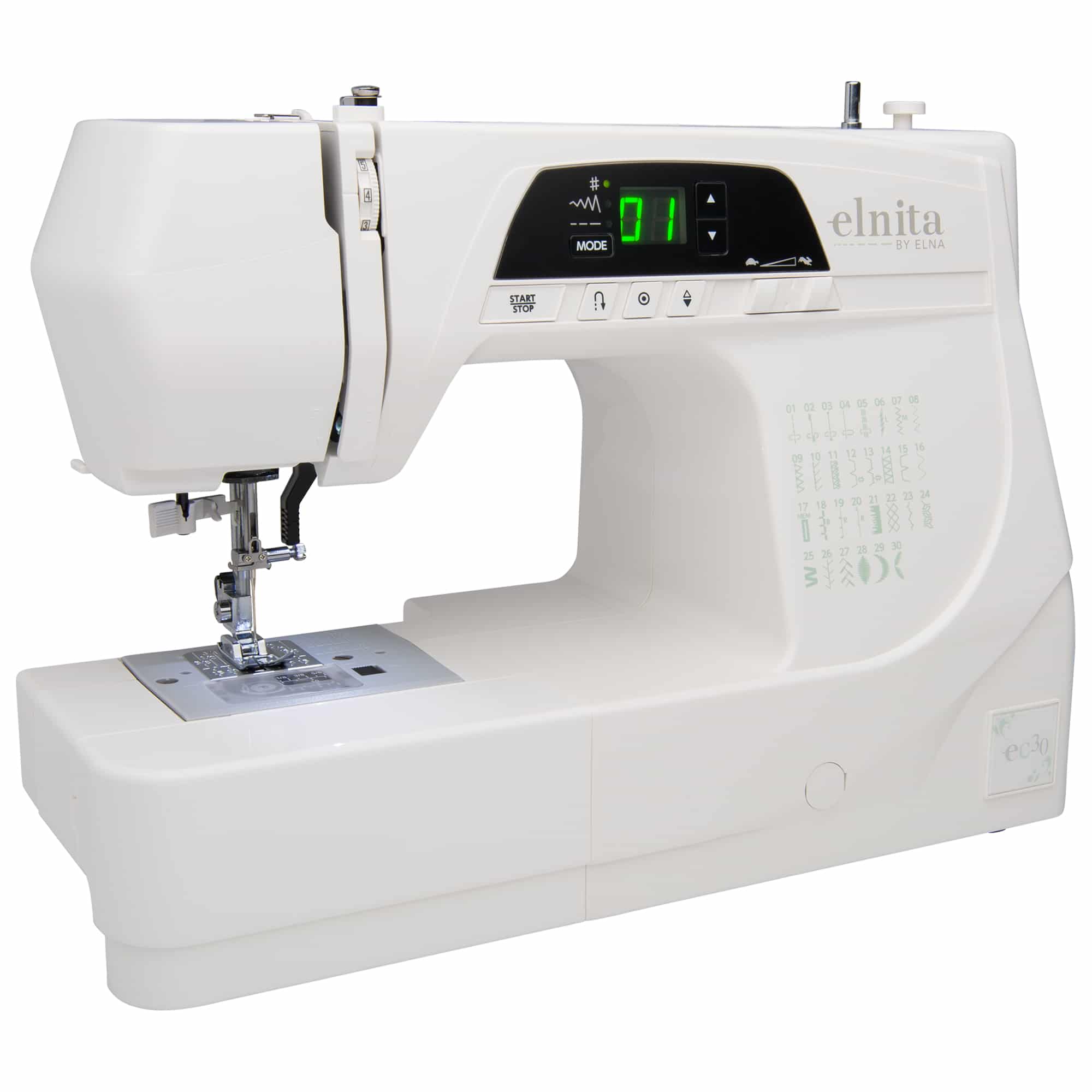
Explore this need in the finder →The Elna elnita EC30 is a computerized household machine aimed at ordinary sewing with a compact 30-stitch menu, a top drop-in bobbin and a clear LCD display. Its product page highlights useful controls beside the screen—locking stitch, reverse and needle up/down—and says the foot control sets sewing speed. The exact English instruction book adds a speed slider and Start/Stop button, so the machine can be run either by pedal or by button after the foot control is disconnected. That’s a more flexible everyday arrangement than the mechanical EM16, but it is not the same as a documented numeric maximum-speed specification: Elna’s EC30 page does not publish an spm figure.
Thirty stitches, not a claim of thirty solutions
The 30 built-in patterns cover utility and decorative work, but the count alone does not tell you whether a particular stitch suits a fabric or finish. The online stitch chart and manual should guide the selection, and the manual warns that stretch-stitch results can change with fabric, layer count and sewing speed. The page’s accessory list includes a sliding buttonhole foot, standard foot, zipper foot and satin foot. The manual describes a “Memory Buttonhole,” but its routine requires the operator to stop, press reverse and continue through the stages; it is not a one-touch, button-sized self-running cycle. There is a useful repeat convenience after that first setup: for another hole of the same size, the manual says to position the fabric and start again; the machine repeats the sequence and stops. If a fully automatic first buttonhole cycle is essential, compare the EC60 or a model with that exact process instead of interpreting the word “memory” as automatic.
Top loading and a free-arm style routine
The top drop-in bobbin is visible under a clear cover, so it is easy to see whether thread is present. The manual describes an extension table with accessory storage that can be removed for free-arm work, making the change useful for sleeves and cuffs. The exact product page does not enumerate that table separately in its standard-accessory list, so confirm package contents if it is a deciding extra. The reviewed sources also publish no throat or table dimensions; compare those measurements if you routinely sew bulky quilt sandwiches. Elna lists three bobbins, extra spool pins, a foot controller, dust cover and standard, zipper, satin and sliding-buttonhole feet in the box, but no separate walking foot. The manual specifies the machine’s compatible plastic bobbin (part 102261000) and warns that alternatives such as pre-wound paper bobbins can cause stitching problems or damage the bobbin holder, so check the part before buying replacements.
Match the workflow, not an assumed speed rating
The exact manual supports both foot-control and Start/Stop operation, plus a speed slider; the latter is a useful option for a learner or detailed work. No maximum stitches-per-minute figure appears on the product page, so a numeric speed requirement remains unverified. The machine also should not be assumed to have a wide throat, automatic thread cutter, integrated dual feed or motorized embroidery. If you need a known stitch width, verify the model’s current specification sheet: the reviewed page calls out a 5 mm width for the buttonhole foot, not the machine’s maximum zigzag width.
Setup and practice affect the result
The LCD is part of the sewing workflow, not just a stitch counter: the manual separates pattern selection from stitch-width and stitch-length adjustment modes. It describes width adjustment as either stitch width or needle-drop position depending on the selected pattern, so do not assume every decorative pattern can be varied in the same way. For fabric-sensitive work, the manual gives a fabric/thread/needle chart, recommends testing needle choice on a scrap, and calls for interfacing with stretch fabrics; it also recommends a blue-tip needle for stretch, very fine fabric and synthetics. That extra preparation is more useful than treating “30 stitches” as 30 automatic fabric recipes. For a first-time buttonhole on fine or stretch fabric, use the manual’s interfacing advice and test the foot’s positioning on a remnant before opening a finished garment.
Routine care is manageable but specific
The owner’s manual includes a straightforward lint-cleaning routine rather than suggesting the machine is maintenance-free. With power switched off and the plug removed, the procedure takes out the needle, presser foot, bobbin and needle plate so lint can be brushed from the bobbin holder, feed dogs and hook race; it says not to dismantle parts beyond the section’s instructions. The manual recommends a soft cloth with neutral soap for the outside and a cool, dry storage place away from high humidity, heat radiators and direct sun. That is ordinary domestic upkeep, but it does mean setting aside time to clean around the bobbin mechanism instead of assuming a clear bobbin cover prevents lint build-up.
Where it sits in the elnita line
Pick the EC30 if you want computerized controls and an accessible top bobbin but do not require a manufacturer-published maximum width or speed, or an automatic first-pass buttonhole. The EC60 steps up to 60 stitches, 7 mm maximum width, adjustable presser-foot pressure, a published 820-stitches-per-minute maximum and a buttonhole that stops automatically; its listed quilting feet make it the more relevant comparison for someone sewing quilt blocks. The mechanical EM16 gives up the LCD, speed slider and Start/Stop arrangement in return for dial-based controls, 16 stitches and a documented four-step buttonhole; it publishes a 650-spm maximum, but lacks a separate speed limiter. These are functional differences, not quality rankings. The EC30 is the middle choice for a simpler computerized general-sewing routine, while a buyer who needs a verified throat measurement, walking foot or automatic seam-end cutter should keep comparing models because the EC30’s reviewed sources do not establish those features.
Key details at a glance
| Motor and stitch controls | Manual pp.5–10 documents Start/Stop, speed slider and pedal disconnection. |
|---|---|
| Stitch choices and limits | Exact page lists 30 stitches; no max width/length/spm established. |
| Buttonhole routine | Manual pp.29–32: Memory Buttonhole requires operator stops and reverse input, not auto one-step. |
| Supplied tools and fabric support | Page lists sliding buttonhole, standard/zipper/satin feet, controller and tools. |
| Needle setups, cutting and memory | General single-needle sewing; no embroidery hoop or serger setup. |
Use the exact model’s instructions for operating limits, supplied equipment and version differences.
Sources for this assessment
Choose the operating routine that suits your work.
Start with whether you sew, embroider, serge or coverstitch, then compare controls, working area, supplied tools and setup limits.